Building a more resilient predictive supply chain for a fast-moving ASEAN food brand
Ina Cookies, a cookie brand operating across ASEAN markets, needed a stronger way to manage demand volatility, production planning, and inventory movement without forcing the team to live in reactive spreadsheet mode. Intellinovus designed a predictive supply-chain workflow that improved forecast quality, reduced stockouts, and gave the business a more dependable operating rhythm from planning through replenishment.
A fast-moving cookie brand with real growth demand, but too much planning friction
The planning team was dealing with a familiar but expensive pattern: some products were moving faster than expected, some inventory was sitting too long, and the decisions needed to correct those imbalances were arriving later than the business could comfortably absorb.
Who this work was for
Ina Cookies is a cookie brand from ASEAN operating in a supply chain where product availability, production timing, and inventory discipline all matter. The business did not need abstract AI experimentation. It needed a more reliable planning model that could support real operational decisions.

The business pain was showing up in stock pressure, forecasting misses, and too much reactive planning
Before Intellinovus got involved, the supply-chain planning process depended too much on historical assumptions, spreadsheet interpretation, and late-stage manual adjustment. That might work when demand is stable, but it starts to break once product movement shifts faster than the team can interpret it.
For Ina Cookies, the result was familiar. Some higher-velocity products ran too close to empty, while slower-moving stock tied up working capital longer than it should. Teams were often forced into reaction mode, trying to rebalance supply after the signal had already become a problem. That created pressure across production planning, warehouse coordination, and commercial availability.
The business did not simply need “better analytics.” It needed a workflow that could detect demand shifts earlier, improve confidence in forecast outputs, and support inventory decisions with stronger operational timing.
Why the old planning model was starting to cost too much
The core problem was not a single inventory issue. It was a planning model that became more fragile as the business scaled across products, channels, and replenishment decisions.
Forecasting was too slow to reflect live demand changes
Historical planning models could not always capture the speed of real market movement, which meant some replenishment decisions were being made with lagging signals rather than current operational context.
Stockouts and overstocks were happening in the same system
Some product lines risked running short while others sat too long in inventory. That combination hurts both revenue and working capital, especially when planning teams are trying to manage growth with imperfect visibility.
Operations teams were spending too much time on reactive correction
Instead of working from a stronger forecast baseline, staff were often compensating manually once a mismatch became visible. That created more noise in planning and reduced confidence in the system.
Inventory decisions needed stronger coordination across the workflow
Forecasting, production timing, and inventory balancing all affect one another. Without a more connected workflow, decisions in one part of the chain were too likely to create friction somewhere else.
What the supply-chain workflow had to get right to be commercially useful
This project could not stop at better analytics language. The system had to improve inventory timing, planning confidence, and operational coordination without turning manufacturing decisions into blind automation.
The workflow had to support real planning decisions, not only reporting
A dashboard alone would not solve the issue. Forecasting output needed to influence replenishment timing, production planning, and inventory balancing in a way teams could actually use.
Stock pressure and overstock risk existed in the same system
The business was managing both availability risk and working-capital drag at once, so the process had to improve balance rather than optimize for only one side of the problem.
Human oversight still mattered in manufacturing and inventory decisions
The client needed better signals and clearer recommendations, but final decisions still had to sit with people accountable for production, warehousing, and service levels.
The workflow had to fit a fast-moving food brand operating reality
Food production and distribution create timing pressure. The system needed to improve responsiveness early enough to matter before stock issues reached the floor or warehouse.
A predictive supply-chain workflow designed around demand visibility, planning quality, and better replenishment timing
Intellinovus did not approach this as a dashboard-only analytics project. The goal was to create a planning workflow that made inventory decisions more dependable across forecasting, stock balancing, and operational coordination.
Demand forecasting with stronger live signal interpretation
We designed a predictive workflow that could evaluate sales movement, product velocity, and planning signals with more responsiveness than the previous manual-heavy process.
Inventory balancing support
The workflow helped the business identify where stock pressure was building and where rebalancing or replenishment decisions needed to happen earlier.
Planning coordination across production and warehousing
Rather than treating forecasting as a detached reporting exercise, Intellinovus connected it more directly to the operating decisions that affect production timing and warehouse execution.
Governed decision support instead of blind automation
The system was designed to improve planning quality without forcing the business to surrender control. Teams could work from stronger signals and clearer recommendations while keeping human oversight where it mattered.
How the workflow changed day-to-day planning and inventory management
The operational improvement came from making forecasting outputs more actionable across the system, not from producing one more planning dashboard.
Planning moved earlier in the cycle
The team could identify demand shifts sooner, which reduced the number of decisions being made only after stock pressure had already become visible.
Forecasting connected more directly to replenishment action
Signals became more useful because they fed planning and inventory-balancing decisions instead of living as a detached reporting exercise.
Operations spent less time correcting preventable mismatches
With stronger visibility into velocity and stock pressure, teams had fewer reasons to chase urgent manual fixes after the fact.
Inventory discipline improved across the wider system
The workflow helped the business protect high-demand lines while reducing unnecessary buffer stock on slower-moving products.
The result was a more disciplined supply-chain rhythm, not just a forecasting upgrade
Intellinovus helped Ina Cookies move from reactive planning into a more stable operating model where demand shifts were easier to interpret, replenishment timing improved, and inventory decisions became less dependent on late manual correction.
Reduction in stockouts
The new forecasting and coordination workflow helped the business protect availability on higher-demand lines instead of reacting after shelves were already under pressure.
Lower inventory carrying costs
Better demand visibility reduced the need to buffer the entire system with excess inventory, which gave the business a more disciplined working-capital position.
Improvement in forecast accuracy
The planning workflow became more reliable because the team had a stronger view of actual demand movement, product velocity, and replenishment timing.
For Ina Cookies, that meant fewer moments where the team was surprised by demand pressure after it was already hurting availability. It also meant less unnecessary inventory drag on slower-moving products, which created a better balance between service level and cost discipline. Those are the kinds of outcomes that matter in a manufacturing and retail supply chain because they affect revenue, cash, and confidence in the planning process.
The important point is that the value did not come from AI as a surface feature. It came from redesigning the planning workflow so that teams had stronger forward signals and better decision support. That is what made the result commercially useful instead of simply technically interesting.
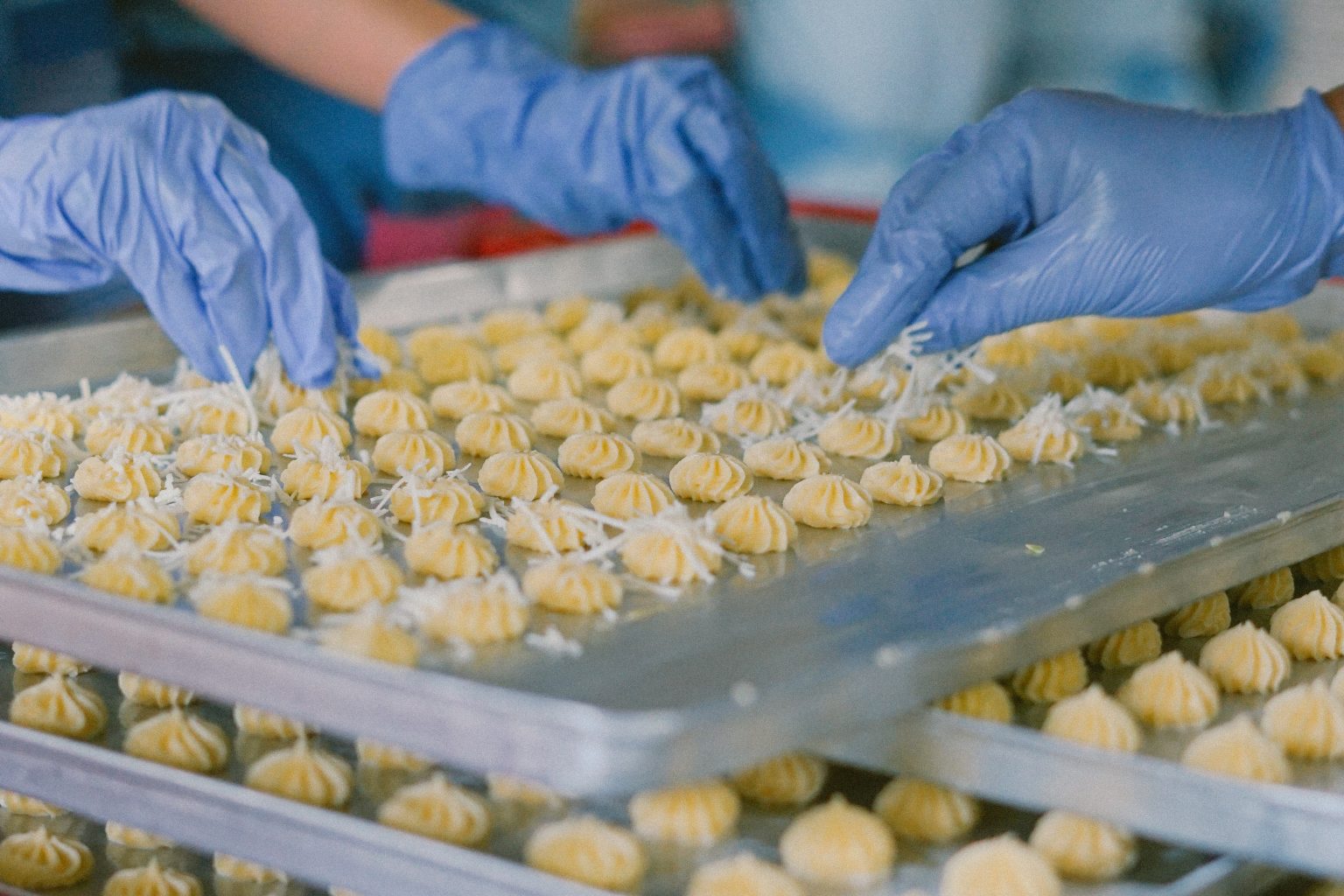
A production environment where forecasting discipline shapes manufacturing, inventory, and sell-through
This was a real manufacturing and supply problem, not a generic analytics exercise.
When a food brand scales, small planning misses start to multiply. Demand uncertainty affects production timing, warehouse flow, and the ability to keep the right products available without carrying too much excess stock.
That is why Intellinovus focused on a workflow that could improve signal quality before the problem surfaced on the floor or in the warehouse. Better forecasting only matters when it improves the operating rhythm of the business.
For Ina Cookies, the outcome was a planning model that felt more grounded in real demand behavior and more supportive of the decisions the team had to make every week.
The solution worked because it strengthened planning decisions the team already had to make
Intellinovus did not position this as AI replacing the supply-chain team. The real work was improving the quality of the planning system around that team. Forecasting had to become more responsive. Inventory balancing had to become more disciplined. Replenishment decisions had to happen with stronger timing and better context.
The gains were commercially meaningful because they showed up in the decisions that affect stock levels, timing, and working capital every week. Better forecasts and replenishment signals gave the team a more stable planning rhythm, while human oversight stayed in place where judgment was still needed. That is why the outcome felt operational, not experimental.
Need a more reliable planning model across supply, inventory, and demand?
Ready to discuss your use case?
If your team is still reacting to stock pressure too late or carrying too much inventory just to stay safe, we can help you design a stronger forecasting and coordination workflow.