Food and beverage AI for teams that need faster service coordination with less operational friction, not more noise.
Food and beverage teams do not need generic AI experimentation. They need practical workflow support and governed agentic AI systems that improve ordering workflows, service coordination, internal knowledge access, distributor communication, and execution quality without disrupting daily operations. The strongest food and beverage AI services help teams move faster while preserving consistency, responsiveness, and control.
Why food and beverage operations need governed AI instead of generic automation
Food and beverage environments are shaped by pace, service consistency, ordering complexity, and constant coordination between people, suppliers, and operational systems. That makes AI useful, but only when it improves responsiveness without disturbing the operating rhythm. A credible food and beverage AI partner has to understand that execution quality is shaped by cleaner workflows, faster handoffs, and dependable support in the moments that matter.
Food and beverage operations move fast and break easily when coordination slips
Kitchen teams, front-of-house staff, ordering teams, distributors, store managers, and operations leaders often depend on quick handoffs and clear information to keep service moving. When coordination weakens, delays and inconsistencies become visible almost immediately.
Manual follow-up creates drag across service and supply workflows
Many food and beverage businesses still rely on people to reconcile order information, check availability, update teams, and route issues manually. That creates unnecessary lag in service operations and makes day-to-day execution more fragile than it needs to be.
Knowledge consistency is hard to maintain across teams and locations
Menus, service procedures, promotions, operating standards, and supplier information often change faster than teams can absorb them. When staff cannot quickly find the right guidance, execution quality becomes uneven across shifts, sites, and channels.
AI only helps when it supports workflow rhythm instead of disrupting it
Food and beverage businesses do not need generic AI layered on top of already busy operations. They need governed AI systems that improve ordering, service coordination, and internal responsiveness while still fitting the tempo and accountability of the environment.
Practical food and beverage AI use cases for service and operational coordination
The strongest food and beverage AI services usually help where teams are already losing time to repeated follow-up, fragmented information, and manual coordination between service, kitchen, operations, and supply functions. The opportunity is not to automate the human side out of the business. It is to support faster and more consistent execution.
Ordering and request workflow coordination
Help teams organize order-related workflows, route exceptions faster, and improve the clarity of what needs to happen next across service and operations. Better coordination reduces the manual back-and-forth that often slows response quality.
Inventory and supply issue routing
Use governed AI to surface stock or supply problems earlier, route them to the right owners, and improve visibility when inventory starts affecting service. In food and beverage environments, supply coordination often matters most when the issue is time-sensitive and moving quickly.
Service and customer support assistance
Prepare cleaner summaries, surface the right context, and help teams respond more consistently when service issues or customer questions arise. That can improve responsiveness without forcing teams into more manual process overhead.
Operational knowledge retrieval across shifts and locations
Make procedures, menu guidance, promotion details, operating standards, and internal playbooks easier to retrieve for teams working across different roles, sites, or shifts. Faster knowledge access improves consistency where turnover and pace can otherwise create gaps.
Human-agent workflow support for fast-moving operations
Design governed workflows where AI supports retrieval, summarization, and routing while people retain control over service-critical decisions. This matters in environments where teams need help moving faster, but not at the cost of judgment or accountability.
Performance and recurring issue analysis
Help leaders identify repeated coordination failures, service bottlenecks, and execution issues so the business can improve over time. This creates a more practical route to optimization than relying only on fragmented feedback and manual reporting.
Built for environments where timing, service, and consistency all matter
Food and beverage AI has to support the rhythm of the operation, not interrupt it.
Credible food and beverage software development has to respect the pace of service, the dependency on clean handoffs, and the reality that small delays or mistakes can quickly affect customer experience. This is an environment where workflow clarity matters every day.
The systems that work best improve ordering visibility, speed up issue routing, and make it easier for teams to find the right operational context without slowing down the line. They support better execution in the places where manual follow-up is already creating friction.
That is why governed AI matters in food and beverage operations. The value comes from steadier service, stronger coordination, and workflow support that helps the business move faster without becoming more chaotic.
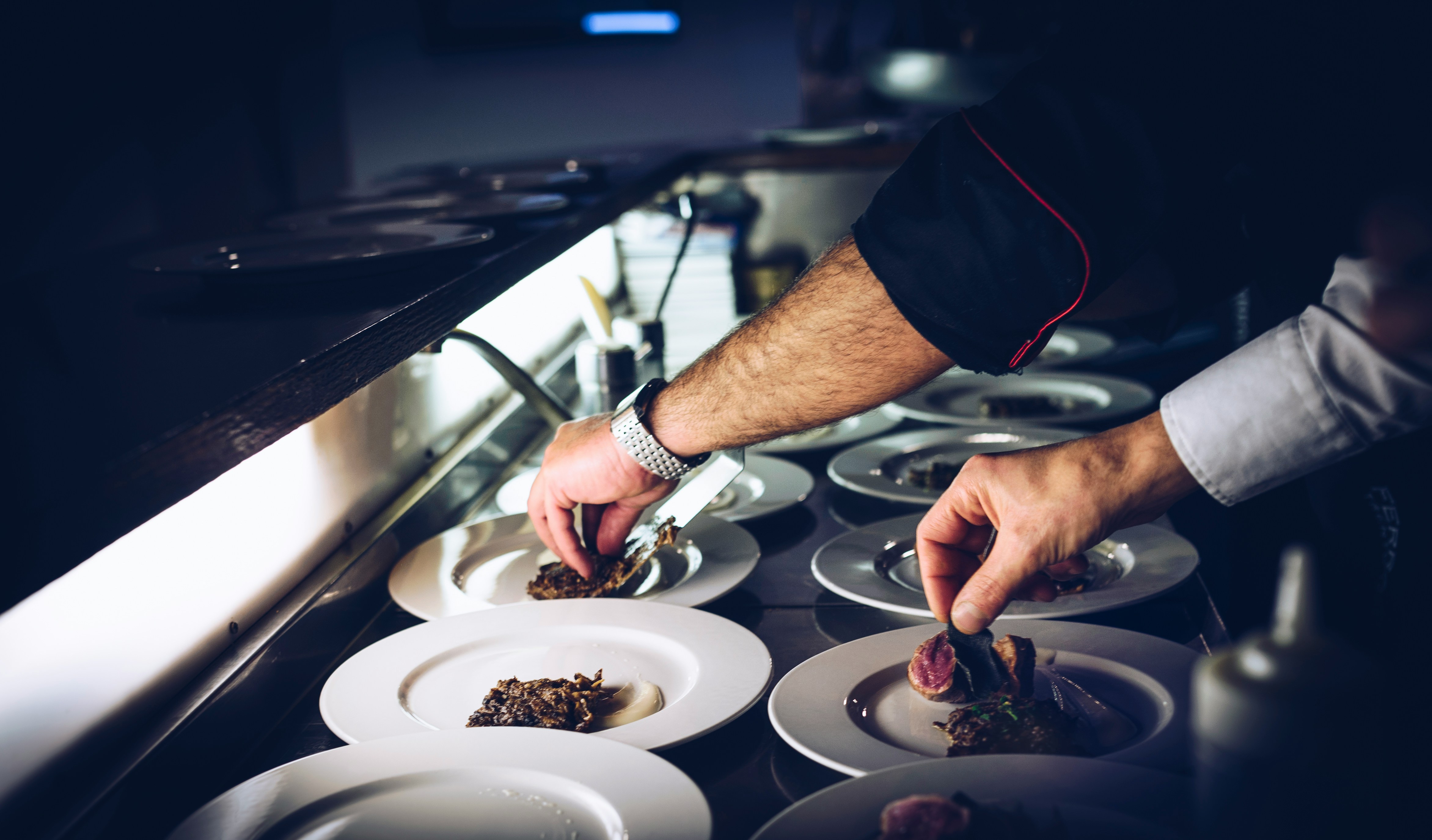
The food and beverage AI services that matter most in this environment
These are the services most likely to matter first for food and beverage teams trying to improve service responsiveness, ordering workflows, and internal coordination without weakening operational control. In most cases, the right path starts with practical implementation, governed human-agent workflows, and stronger optimization over time.
Governance and operational risk in food and beverage AI delivery
Food and beverage AI software needs stronger discipline than a generic automation rollout. The question is not only whether the system can speed up the workflow. It is whether the workflow remains understandable, reliable, and easy to operate under daily service pressure. In this sector, trust comes from cleaner escalation, clearer ownership, and support that fits the operation.
Operational clarity matters more than clever features
Teams need to know what the system is doing, what issue is being routed, and when a person needs to take over. Without that clarity, AI can make already fast-moving workflows harder to manage.
Service-sensitive moments still need human judgment
Some steps can be accelerated, but customer-facing and service-critical moments still need deliberate human review or intervention. Effective systems support teams instead of quietly removing judgment where experience still matters.
Location and team variation changes how workflows behave
Food and beverage businesses often operate across multiple sites, teams, and service contexts with different rhythms and constraints. Governed AI delivery has to fit those operating realities instead of assuming one rigid model works everywhere.
Reliability affects service and margin together
In food and beverage operations, weak reliability shows up as slower service, missed handoffs, inconsistent execution, and more internal friction. That is why governed AI delivery creates more trust than loose experimentation. Reliable workflow support helps the business move faster without destabilizing the operation.
Relevant proof for food and beverage and service-heavy operations
These are the most relevant references for teams evaluating governed AI across service coordination, operational workflows, and customer-facing execution.
Lead Generation Workflow
Useful adjacent proof for customer-facing workflows, response quality, and operational coordination in service-oriented environments.
Measuring ROI In Agentic AI
Useful context for food and beverage teams that need a clearer case for scaling AI across multiple workflows, sites, or service operations.
Ready to explore what governed AI could look like in your food and beverage operation?
Ready to discuss your use case?
If your team is dealing with service pressure, manual ordering coordination, or too much internal follow-up across operations, we can help define a more practical path.